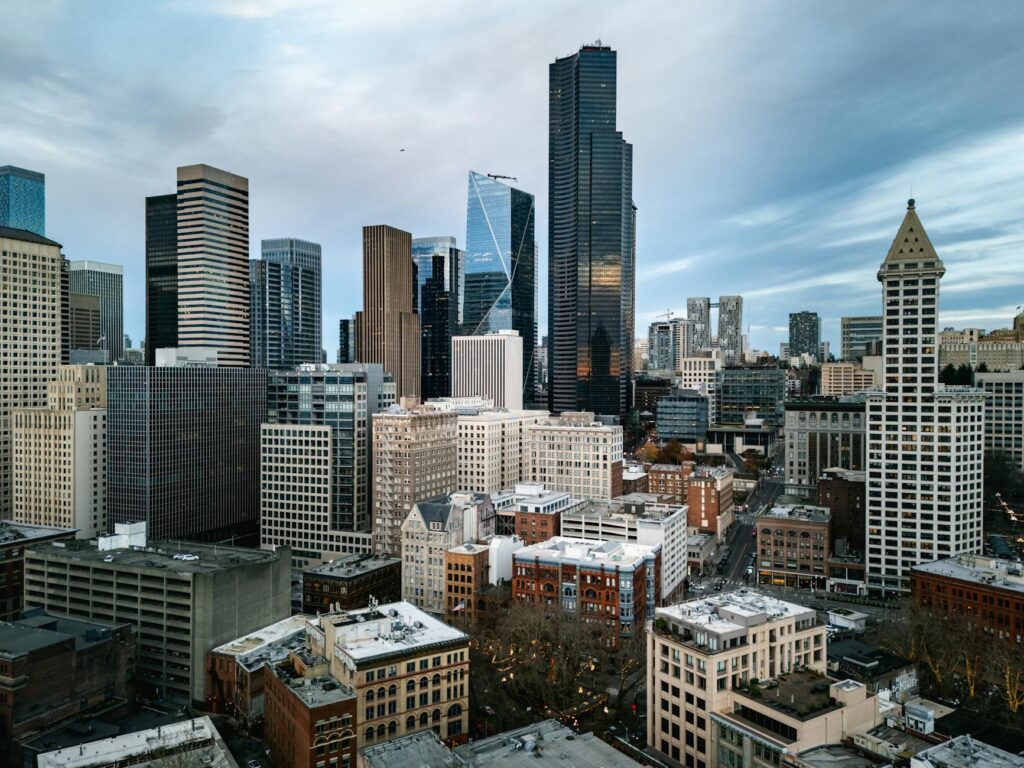
Workers seeking an employment attorney Seattle residents can trust are operating in one of the most worker-protective legal environments in the country — and that environment got significantly stronger on January 1, 2026. Washington State rolled out a wave of new employment law changes that directly affect Seattle employers and workers, covering job security, minimum wage, domestic violence leave, and isolated worker safety rules. If you believe your employer has violated any of these protections, the clock on your claim may already be running.
Browse Seattle attorneys specializing in employment law on ReachAttorneys. Statewide, search all attorneys in Washington by city and county. For practice-specific results, visit the employment law attorneys directory.
Employment Attorney Seattle: Key 2026 WA Law Changes
Washington’s 2026 employment law overhaul is one of the most comprehensive in the state’s recent history. Several changes took effect January 1, 2026, according to analyses by Perkins Coie and Ballard Spahr:
Job protection after 180 days. Washington workers now earn job protection after just 180 days on the job — down from the prior requirement of 12 months and 1,250 hours. The change is phased by employer size: companies with 25 or more employees must comply starting January 1, 2026. Companies with 15 or more employees follow in 2027. This is one of the most significant expansions of job security for shorter-tenure employees in Washington history.
Minimum wage increase. Washington’s statewide minimum wage rose to $17.13 per hour on January 1, 2026. In Seattle, the city minimum is even higher — $21.30 per hour for all employees — under Seattle’s Office of Labor Standards rules. Workers earning below these rates have a wage theft claim.
Expanded domestic violence leave (SB 5101). Washington expanded its domestic violence leave law to cover victims — and family members of victims — of hate crimes, including those committed online. Employers must provide reasonable unpaid leave and safety accommodations under this expansion. Retaliation for taking such leave is now explicitly prohibited.
Isolated worker safety rules. New safety requirements took effect for employees who work alone in hotels, motels, retail stores, security firms, and property service companies. The rules expand what counts as an “isolated” work situation and require employers to provide panic buttons, training, and recordkeeping for affected workers.
Did you know? According to the Washington State Department of Labor & Industries, Seattle-area employment claims rose 11 percent in 2025, with wage theft and leave retaliation topping the list of worker complaints filed with the Office of Labor Standards.
Common Employment Cases in Seattle
An employment attorney Seattle workers consult handles a range of disputes. The most active case types in King County in 2026 include:
- Wage and hour claims — Violations of Seattle’s $21.30 minimum wage, tip credit rules, and overtime requirements under the FLSA and Washington’s Minimum Wage Act
- Wrongful termination — Dismissal in violation of Washington’s Law Against Discrimination (WLAD) or in retaliation for protected activity
- Discrimination claims — Race, gender, disability, sexual orientation, and age discrimination under WLAD and Title VII
- New 180-day job protection violations — Termination of workers before 180 days to avoid new protections, or denial of job restoration after qualified leave
- Domestic violence and hate crime leave retaliation — Adverse action following protected leave under SB 5101 or the prior domestic violence leave statute
- Non-compete agreement enforcement — Washington bans nearly all non-compete covenants effective June 2027, but courts already scrutinize their enforcement under existing law
- FMLA and Washington Family Care Act violations — Denial of leave or retaliation for using state or federal family and medical leave
- Employer I-9 audit notification failures — Starting June 11, 2026, Washington employers must notify their workforce of upcoming I-9 audits; failure is an unlawful practice
Washington Employment Law and Seattle’s Court System
Washington is an at-will employment state, but its human rights laws are among the strongest in the country. The Washington Law Against Discrimination (RCW 49.60) covers more protected classes than federal law and allows for broader damages, including emotional distress recovery in some cases.
Employment disputes in Seattle are typically filed in King County Superior Court for state law claims, or in the U.S. District Court for the Western District of Washington (Seattle division) at 700 Stewart Street for federal claims. The Seattle Office of Labor Standards (OLS) also enforces city-specific wage and scheduling ordinances and can investigate and penalize employers directly, providing an alternative enforcement path for workers who do not want to file suit.
The Washington State Bar Association provides a lawyer referral service. Workers’ rights organizations such as OneAmerica and the National Domestic Workers Alliance also operate in Seattle and can connect workers with legal resources.
| Claim Type | Governing Law | Filing Deadline |
|---|---|---|
| Wage theft (Seattle OLS) | SMC 14.19 / 14.20 | 3 years from violation |
| Discrimination (WLAD) | RCW 49.60 | 3 years from discriminatory act |
| FLSA wage theft | 29 U.S.C. § 201 | 2 years (3 if willful) |
| Wrongful termination | WLAD / common law | 3 years (WLAD); varies for others |
| FMLA retaliation | 29 U.S.C. § 2617 | 2 years (3 if willful) |
What to Look for in an Employment Attorney Seattle Workers Trust
Seattle has a deep bench of employment law practitioners, but matching the right attorney to your case matters. Here is what to evaluate:
Knowledge of the 2026 law changes. The new 180-day job protection rule, the SB 5101 expanded domestic violence leave, and the isolated worker safety requirements are all new in 2026. Look for an employment attorney Seattle courts have seen handle these specific protections, not just FLSA or discrimination cases from prior years.
Seattle OLS enforcement experience. The Office of Labor Standards is a powerful alternative to litigation for wage theft and scheduling claims. An attorney familiar with OLS investigations can often recover unpaid wages faster and at lower cost than a federal lawsuit allows.
Washington Law Against Discrimination expertise. WLAD claims under RCW 49.60 allow for broader damages than federal Title VII in some circumstances, including emotional distress awards. An employment attorney Seattle plaintiff firms recommend will evaluate both state and federal claims simultaneously.
Contingency fee availability. Most Seattle employment attorneys handle wage theft and discrimination claims on contingency, meaning no upfront cost to the worker. Always confirm before signing an engagement letter.
Bilingual capacity. Seattle’s workforce is highly multilingual. Employment attorneys fluent in Spanish, Somali, Vietnamese, or Tagalog serve specific communities with historically high rates of wage theft and misclassification. Check attorney profiles for language capabilities.
Find an Employment Attorney Seattle Workers Recommend
The ReachAttorneys Seattle directory lists employment attorneys, wage and hour lawyers, and workplace discrimination specialists across King County. Profiles include each attorney’s practice areas, bar admission date, and contact information.
Workers across the state can also search the broader Washington attorney directory for employment lawyers in Tacoma, Bellevue, Spokane, and beyond.
Related Guides
For employment law coverage in Texas, see: Texas AI Hiring Law Puts Houston Employees on Alert. For California gig worker rights under AB 1340, see: CA AB 1340 Puts L.A. Gig Workers in the Driver’s Seat.
Frequently Asked Questions
What is Seattle’s minimum wage in 2026?
Seattle’s minimum wage is $21.30 per hour for all employees in 2026, regardless of employer size. Washington State’s statewide minimum is $17.13 per hour. If you are earning less than these amounts, you have a wage theft claim that an employment attorney Seattle practitioners handle regularly.
Does Washington’s new 180-day job protection apply to me?
If you work for an employer with 25 or more employees in Washington and have been employed for at least 180 days as of January 1, 2026, you have job protection rights under the new law. Smaller employers phase in over the next two years. Consult an employment attorney Seattle firms recommend if you were terminated before hitting this threshold.
Can my employer fire me after I report discrimination in Seattle?
No. Washington Law Against Discrimination (RCW 49.60) prohibits retaliation for opposing discriminatory practices or filing a complaint. Retaliation claims are among the most common employment cases in Seattle. Document any adverse action and contact an employment attorney immediately.
What does Washington’s hate crime leave expansion cover?
Under SB 5101 (effective January 1, 2026), Washington employees who are victims of hate crimes — including online hate crimes — or whose family members are victims, may take reasonable unpaid leave and request safety accommodations. Employers cannot retaliate against workers for exercising this right.
How do I file a wage complaint in Seattle?
Seattle workers can file a wage theft complaint directly with the Seattle Office of Labor Standards (OLS) at seattle.gov/laborstandards. OLS investigates, mediates, and penalizes employers for city minimum wage, tip, and scheduling violations. An employment attorney Seattle OLS practitioners recommend can help you prepare the strongest possible complaint.
Practice Employment Law in Seattle?
Make sure to register your profile on ReachAttorneys and connect with clients actively searching for legal help in your area.
Disclaimer: This article is for informational purposes only and does not constitute legal advice. Consult a qualified attorney for guidance on your specific situation.
Employment Law Attorneys in Seattle
Connect with experienced attorneys in your area on ReachAttorneys.com







Leave a Reply
You must be logged in to post a comment.