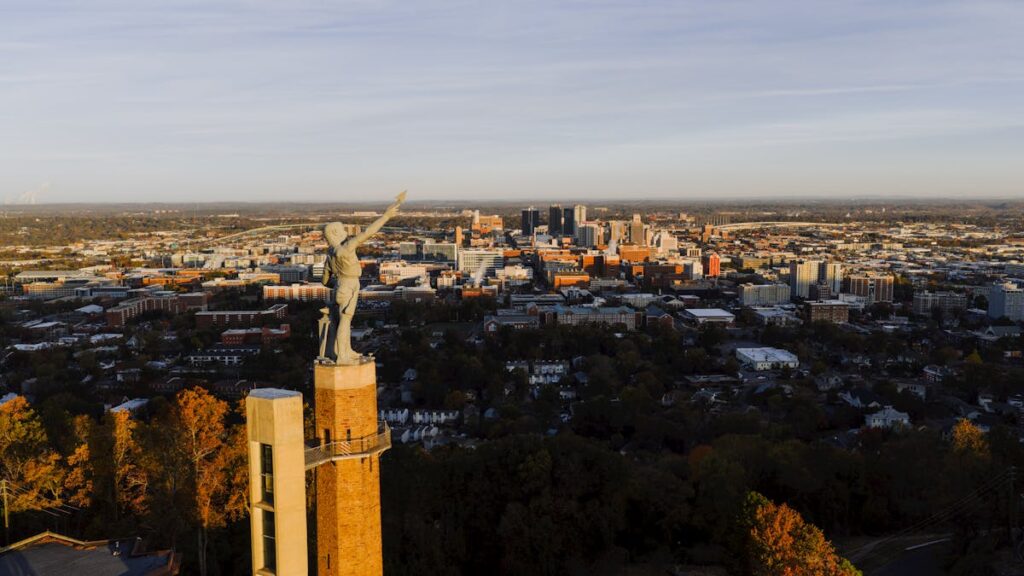
SCOTUS VRA Ruling Reshapes Birmingham Civil Rights Cases
If you need a Birmingham civil rights attorney right now, your timing aligns with the most consequential voting rights week in a generation. On May 11, 2026, the U.S. Supreme Court vacated the 2023 order that had blocked Alabama from using a congressional map federal courts had previously ruled racially discriminatory. The vacatur followed the Court’s April 29, 2026 decision in Louisiana v. Callais, which significantly narrowed Section 2 of the Voting Rights Act and recast the standard for proving vote dilution.
Birmingham sits at the geographic and political center of the fallout. Birmingham anchors Jefferson County, where Black voters comprise more than 40% of the population and where ongoing redistricting fights — including McClure v. Jefferson County Commission, in which a federal court struck down the 2021 commission map as a racial gerrymander on September 16, 2025 — continue to shape local political power. The Callais decision changes how those cases will be litigated going forward. For practitioners across Alabama, every active or contemplated civil rights matter involving voting, redistricting, or racial classification now needs a fresh review.
Civil rights practice in Birmingham extends well beyond voting, of course. Police misconduct, employment discrimination, housing discrimination, and §1983 actions remain the bread and butter for many Birmingham firms. Below, we explain the new SCOTUS landscape, the categories of cases Birmingham civil rights attorneys handle most often, and what to look for when hiring counsel in a fast-changing legal environment.
What Callais and the Alabama Vacatur Mean for Birmingham Litigation
In Louisiana v. Callais, decided April 29, 2026, the Supreme Court held that Section 2 of the Voting Rights Act imposes liability only when circumstances give rise to a strong inference of intentional racial discrimination. The decision pivots Section 2 analysis away from disparate-impact-style proofs toward more demanding intent requirements rooted in the Fifteenth Amendment. Two weeks later, on May 11, the Court vacated the 2023 injunction in the Alabama congressional redistricting case and sent it back for reconsideration under the new standard.
For Birmingham civil rights practitioners, the immediate work is recalibration. Pending voting rights complaints need to be reviewed against Callais’s intent framework. Local cases like McClure v. Jefferson County Commission — where a federal court found the 2021 commission map an unconstitutional racial gerrymander — will play out under shifting Supreme Court doctrine. Alabama Governor Kay Ivey called a special legislative session on May 1, 2026, and the legislature passed primary-election bills on May 8 to clear a path for using the 2023 map in upcoming primaries. Civil rights groups have begun signaling new litigation strategies that lean more on Fourteenth Amendment intentional-discrimination theories than on Section 2’s traditional totality-of-circumstances framework.
Common Birmingham Civil Rights Attorney Cases
Birmingham civil rights attorneys handle a broad mix of federal and state matters. The most frequent include:
- Police misconduct and excessive force — Section 1983 claims against the Birmingham Police Department and Jefferson County Sheriff’s deputies for Fourth Amendment violations.
- Wrongful arrest and false imprisonment — Federal and state claims, often paired with Section 1983.
- Employment discrimination — Title VII race, sex, age, disability, and retaliation claims filed in the Northern District of Alabama.
- Housing discrimination — Fair Housing Act enforcement, including HUD complaints and federal court suits.
- Voting rights and redistricting — Section 2 VRA claims, racial gerrymandering challenges, and Fifteenth Amendment intent cases.
- School and education civil rights — Title IX, Title VI, and ADA cases involving Jefferson County and Birmingham City Schools.
- First Amendment claims — Speech, retaliation, and assembly cases against state and local actors.
- Disability and accessibility — ADA Title II and Title III enforcement.
Alabama Laws and the Birmingham Federal Court System
Civil rights cases in Birmingham move primarily through federal court because most claims arise under federal statutes. The Northern District of Alabama, headquartered in Birmingham at the Hugo L. Black U.S. Courthouse, has original jurisdiction over Section 1983, Title VII, Fair Housing Act, and Voting Rights Act claims arising in Jefferson and Shelby Counties. Appeals go to the Eleventh Circuit Court of Appeals in Atlanta.
Alabama also provides state-law remedies. The Alabama Department of Examiners of Public Accounts and the Alabama Ethics Commission handle some misconduct allegations against public officials. Employment claims may run through the EEOC’s Birmingham Field Office, which issues right-to-sue letters before federal filing. Filing deadlines matter — Title VII charges must be filed with the EEOC within 180 days of the discriminatory act in most cases, extended to 300 days where a deferral agency exists.
Did you know? Black residents comprise more than 40% of Jefferson County’s population, yet the 2021 commission redistricting plan packed them into just two of five districts — leading a federal court to strike the map down on September 16, 2025 as an unconstitutional racial gerrymander. Source: NAACP Legal Defense Fund.
Key Birmingham Civil Rights Deadlines
| Claim Type | Deadline | Forum |
|---|---|---|
| Section 1983 (police misconduct) | 2 years (Alabama) | N.D. Ala. federal court |
| Title VII (employment) | 180 days to EEOC | EEOC Birmingham Field Office |
| Fair Housing Act | 1 year to HUD, 2 years to court | HUD or N.D. Ala. |
| Voting rights (Section 2) | No federal statute; laches applies | N.D. Ala. federal court |
| Title IX (education) | 2 years (Alabama) | N.D. Ala. or OCR |
What to Look for in a Birmingham Civil Rights Attorney
Finding the right Birmingham civil rights attorney requires more than scanning a website. Civil rights litigation is technically demanding and politically charged, and the right counsel will combine federal court experience with a clear-eyed read of how Birmingham juries and Eleventh Circuit panels actually decide cases.
Federal court depth. Most civil rights cases live in federal court. Ask how many trials and dispositive motions the attorney has handled in the Northern District of Alabama, and whether they have argued before the Eleventh Circuit. A practitioner who knows the local judges’ summary-judgment rhythms can save you months of motion practice.
Subject-matter focus. Civil rights spans many subfields. A Title VII employment specialist may not be the best fit for a Section 1983 excessive-force case, and vice versa. Confirm that the attorney handles your specific claim type regularly.
Birmingham Bar Association resources. The Birmingham Bar Association maintains active sections in civil rights and federal practice. Membership and section leadership often signal depth.
Fee structure. Many civil rights cases proceed on contingency, with fees recovered under federal fee-shifting statutes (42 U.S.C. §1988 for Section 1983, Title VII for employment). Confirm the fee arrangement in writing before the first deposition.
Litigation strategy fit. Some civil rights firms aggressively pursue trial. Others negotiate efficient settlements. Both can be effective. Choose counsel whose litigation philosophy matches your goals — whether that is monetary recovery, policy change, or public accountability.
Practice Civil Rights Law in Birmingham on ReachAttorneys
ReachAttorneys connects Birmingham residents with vetted civil rights practitioners across Jefferson County. Each profile shows practice focus, federal court experience, and contact details so you can compare options before scheduling a consultation.
Whether you are pursuing a police misconduct claim, an employment discrimination case, or a voting rights challenge under the new Callais standard, the directory lists Birmingham attorneys ready to take on new matters. Browse current listings to find counsel matched to your case.
Related Guides
- See also: Richmond Civil Rights Attorneys — for clients tracking parallel Southern voting rights litigation.
- Also need civil rights counsel further south? See our Atlanta civil rights lawyer guide for Eleventh Circuit comparisons.
Frequently Asked Questions
How much does a Birmingham civil rights attorney cost?
Many cases proceed on contingency, with fees paid from any settlement or judgment. Federal fee-shifting statutes can also require the defendant to pay attorney fees. Hourly arrangements typically run $300 to $600 in the Birmingham market.
How long do I have to file a civil rights case in Alabama?
Section 1983 claims borrow Alabama’s 2-year personal injury statute of limitations. Title VII employment claims require an EEOC charge within 180 days of the discriminatory act. Talk to counsel quickly — these deadlines move fast.
Does the Callais ruling end Voting Rights Act cases in Alabama?
No. Callais narrows Section 2 to require a strong inference of intentional discrimination, but it does not eliminate the statute. New cases will lean more on Fourteenth and Fifteenth Amendment intent theories.
Where do most Birmingham civil rights cases get filed?
Federal claims are filed in the Northern District of Alabama at the Hugo L. Black Courthouse in downtown Birmingham. State-law claims may be filed in Jefferson County Circuit Court. Appeals go to the Eleventh Circuit in Atlanta.
What should I bring to a first meeting with a civil rights lawyer?
Bring all documents related to the incident — police reports, photographs, EEOC correspondence, medical records, witness contact information, and any video. A clear timeline of events helps the attorney evaluate the case quickly.
Practice Civil Rights Law in Birmingham?
Make sure to register your profile on ReachAttorneys and connect with clients actively searching for legal help in your area.
Disclaimer: This article is for informational purposes only and does not constitute legal advice. Consult a qualified attorney for guidance on your specific situation.
Civil Rights Attorneys in Birmingham
Connect with experienced attorneys in your area on ReachAttorneys.com




Leave a Reply
You must be logged in to post a comment.